Can loan apps blacklist your BVN in Nigeria? Discover the truth about BVN blacklisting, your legal rights, and what digital lenders can and cannot do when you default on a loan.
In today’s fast-paced digital economy, loan apps have become a quick solution for many Nigerians facing urgent financial needs.
With just a smartphone, you can access ₦20,000, ₦50,000, or even more within minutes. But what happens when repayment becomes difficult?
For many borrowers, the experience quickly turns stressful.
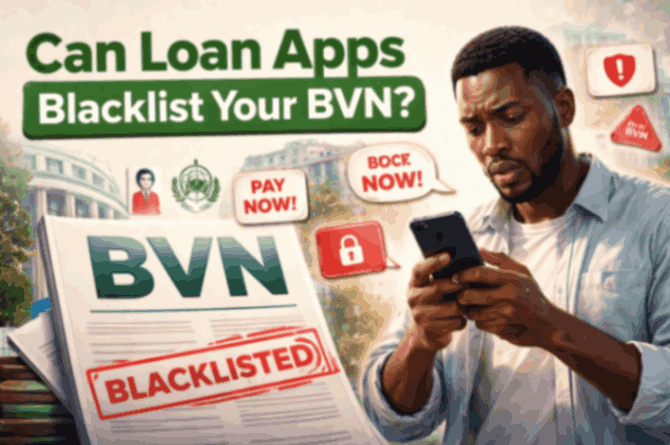
Your phone starts ringing nonstop. Messages flood in with alarming warnings:
- “We will block your BVN!”
- “You will never open a bank account again!”
- “We will destroy your financial life!”
These threats can be frightening—especially if you’re unsure how much power these loan apps actually have.
So let’s break it down clearly and professionally.
Can Loan Apps Really Blacklist Your BVN?
The simple and factual answer is: No, they cannot.
Your Bank Verification Number (BVN) is regulated and managed solely by the Central Bank of Nigeria in collaboration with licensed financial institutions.
No private loan app—no matter how aggressive—has the authority to:
- Block your BVN
- Blacklist your identity from the banking system
- Prevent you from operating a bank account
These are powers reserved strictly for regulatory authorities under Nigerian financial law.
What Loan Apps Can Actually Do
While they cannot touch your BVN, loan apps are not entirely powerless. If you default on a loan, they may take the following actions:
1. Report You to Credit Bureaus
Licensed lenders can submit your loan default information to credit reporting agencies. This may affect your credit score, making it harder to access loans in the future.
2. Persistent Communication
Expect frequent calls, SMS, emails, and reminders. Some platforms use aggressive follow-ups to pressure repayment.
3. Debt Recovery Measures
Some lenders may escalate recovery efforts through third-party agents or legal channels (if they are properly registered and compliant).
What Loan Apps Cannot Legally Do
It’s important to know your rights as a borrower. Loan apps cannot:
- Shut down or “blacklist” your BVN
- Lock you out of your bank accounts
- Arrest you or declare you a criminal over a loan
- Use threats, blackmail, or public shaming as a legal recovery method
If any loan app engages in harassment or intimidation, it may be violating Nigerian consumer protection and data privacy laws.
Is Owing a Loan a Crime?
No—owing a loan is not a criminal offence. It is a civil matter.
That means:
- You cannot be jailed simply for failing to repay a loan
- Disputes are handled through civil legal processes, not criminal prosecution
However, intentionally refusing to repay a loan without valid reason raises ethical and financial concerns. Responsible borrowing still matters.
The Bigger Picture: Responsibility on Both Sides
There are two realities you should know:
- Borrowers should take loans they can realistically repay and avoid intentional defaults.
- Loan apps must operate within the law and stop using fear, harassment, and misinformation as recovery tactics.
Nigeria has seen increasing scrutiny of digital lenders, especially those violating user privacy or engaging in unethical practices.
What Should You Do If You’re Threatened?
If a loan app threatens to blacklist your BVN:
- Stay calm—you now know they don’t have that power
- Avoid panic decisions based on fear
- Keep records of messages or calls as evidence
- Report abusive lenders to appropriate authorities if necessary
Final Thoughts
The fear of BVN blacklisting is one of the most common tactics used by some loan apps—but it’s largely a myth designed to pressure repayment.
Understanding your rights puts you back in control.
So the next time you receive such a threat, the real question is:
Will you panic—or will you respond with knowledge?